
US stock markets staged a strong comeback on Wednesday after President Donald Trump eased tensions with Europe by backing away from previously threatened tariffs and adopting a good decision on Greenland, helping calm fears of a fresh transatlantic trade war that had rattled investors earlier in the week.
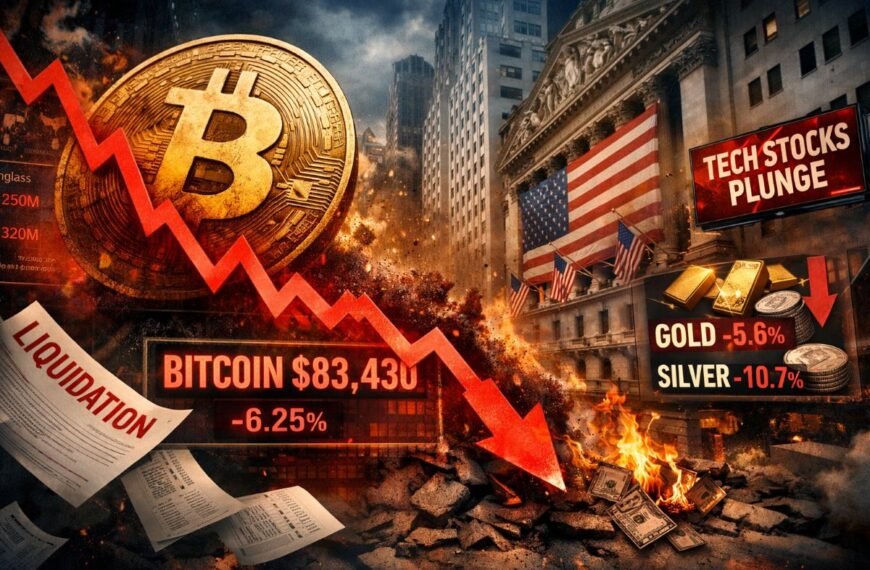
Markets had suffered their worst session since October on Tuesday after Trump’s comments about acquiring Greenland and imposing tariffs on European countries revived uncertainty around US foreign policy and trade relations. The situation improved dramatically on Wednesday when the president said the US would not use “excessive strength or force” to obtain Greenland and confirmed that tariffs scheduled to take effect on February 1 would be put on hold.
In a post on Truth Social, Trump said that after a “very productive meeting” with NATO Secretary General Mark Rutte, the US and NATO had formed the framework of a future deal regarding Greenland and the wider Arctic region. “Due to this framework, I will not be imposing the Tariffs that were scheduled to go into effect on February 1st,” he wrote. Previously, Trump had threatened to impose 10% tariffs, with the possibility of further increases, on European nations that did not support a US purchase of the Danish territory.
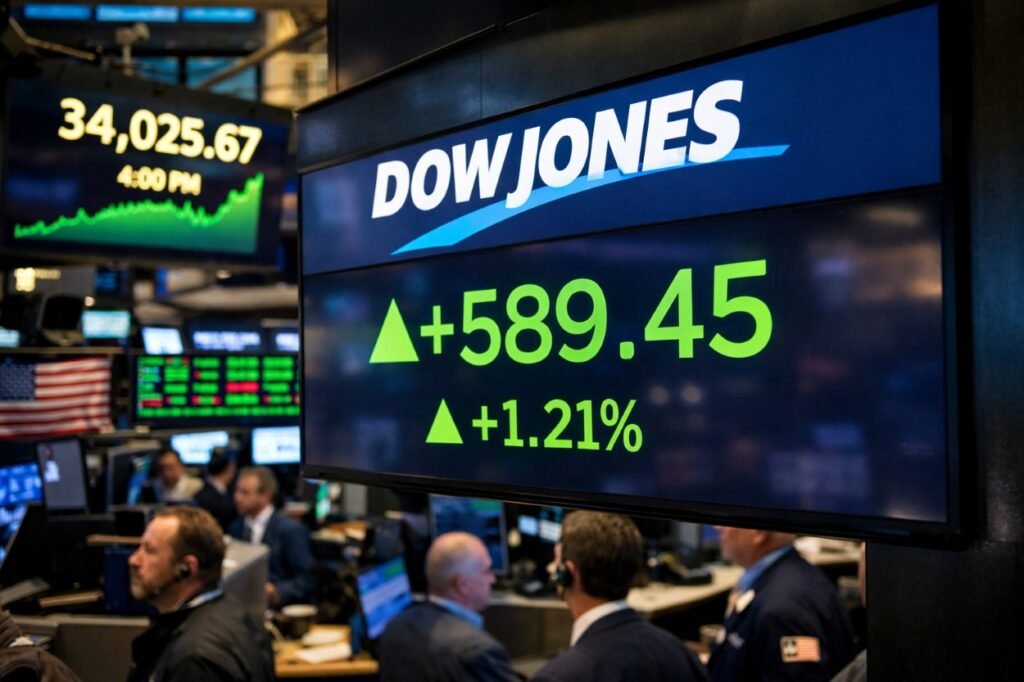
The shift in tone was enough to spark a broad-based rally across Wall Street. The Dow Jones Industrial Average jumped around 550 to 590 points, or roughly 1.2%, reversing much of Tuesday’s sharp decline. The S&P 500 rose about 1.16%, marking its best daily performance since late November, while the tech-heavy Nasdaq Composite climbed around 1.18%, its strongest gain in more than a month. With the rebound, the S&P 500 moved back into positive territory for the year and now it’s just about 1.6% below its all time high.
The rally gained momentum in afternoon trading after Trump’s social media post confirmed that the tariff threat had been shelved. Earlier in the day, stocks had already been edging higher following his less aggressive remarks at the World Economic Forum in Davos, where he called for “immediate negotiations” over Greenland and said the US would not use force to take control of the Danish territory.
Relief spread quickly through financial markets. The so-called “Sell America” trade — in which investors had been dumping US stocks, bonds, and the dollar — began to unwind. The US dollar stabilized, Treasury bonds recovered, and yields eased after climbing to their highest levels since September a day earlier. Rising yields had worried investors because they increase borrowing costs for the government, companies, and consumers, and often signal stress in the financial system.
Some strategists said the bond market reaction may have played a role in encouraging a policy rethink. “The only thing stronger and more intimidating than Trump is the US bond market,” Neil Wilson of Saxo Markets said, noting that a sustained sell-off in Treasuries could have created serious pressure on the US economy.
Wall Street also revived its popular phrase “TACO” — short for “Trump Always Chickens Out” — to describe the pattern of aggressive trade rhetoric followed by a pullback when markets react negatively. However, others warned against assuming that policy risks have disappeared. Former Bank of America economist Ethan Harris argued that a better description might be “Trump Always Tries Again,” suggesting that while measures may be delayed, they are not necessarily abandoned for good.
Beyond geopolitics and trade, investors were also watching key domestic and corporate developments. The US Supreme Court on Wednesday heard arguments over the Trump administration’s attempt to remove Federal Reserve Governor Lisa Cook. The justices appeared skeptical, with some suggesting that allowing the president to fire a sitting Fed governor could undermine the central bank’s independence and potentially shake investor confidence.
On the corporate side, the earnings season remained in focus. Netflix shares slipped after the streaming giant’s quarterly results failed to impress the market, despite solid subscriber numbers. Bloomberg data showed that although many S&P 500 companies are beating earnings expectations, their stock prices are reacting more negatively than usual, reflecting high valuations and cautious investor sentiment. Reports from major companies such as Johnson & Johnson and financial firms like Charles Schwab also kept trading active throughout the session.
Tuesday’s sell-off had been driven by fears that renewed tariff threats could escalate into a broader US-EU trade conflict, similar to past episodes that disrupted global markets. European officials had warned they were “fully prepared” to respond to any new US tariffs, raising the risk of retaliation and further volatility. The possibility of coordinated selling of US assets by foreign investors, particularly in the bond market, had added to concerns.
Wednesday’s rebound, however, showed how quick momentum can turn when political risks appear to ease. The announcement of a framework for negotiations on Greenland and the decision to pause tariff plans helped restore confidence, at least in the short term. Analysts cautioned that details of any final agreement remain unclear and that policy uncertainty is likely to remain a feature of markets under the current administration.
For now, the easing of tensions provided a welcome boost to US equities, with the Dow, S&P 500, and Nasdaq all posting solid gains. As investors look ahead, attention will remain on US-Europe relations, the direction of Treasury yields, the independence of the Federal Reserve, and the pace of corporate earnings


 By
By