
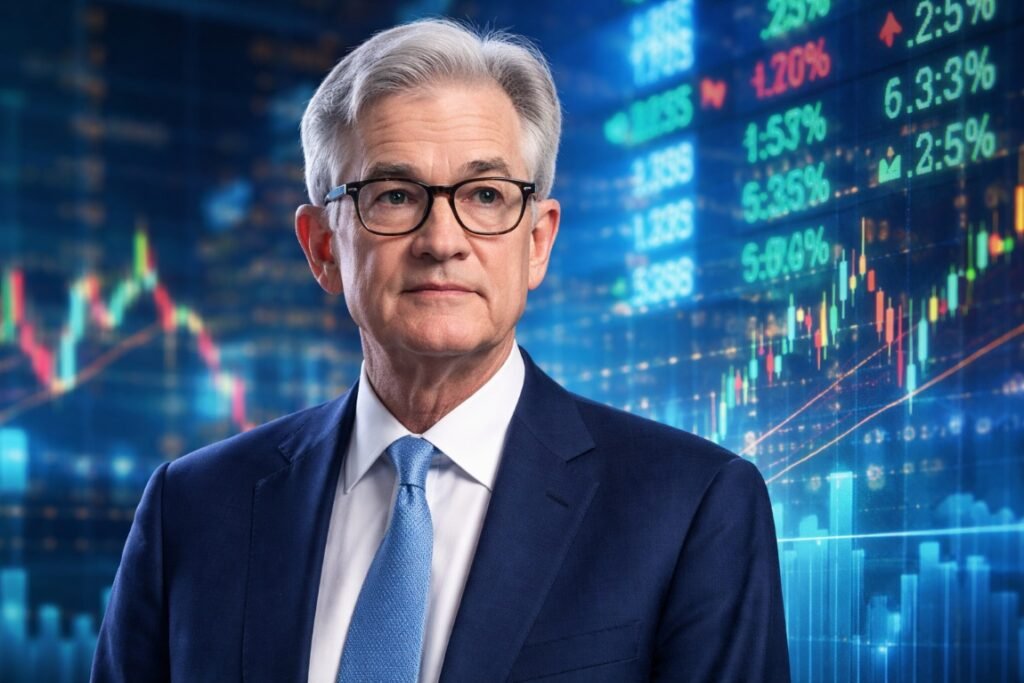
The United States Federal Reserve has decided to keep its key interest rates unchanged in its January 2026 policy meeting, maintaining the federal funds rate in the range of 3.5% to 3.75%. This move comes after three rate cuts in 2025 and reflects the central bank’s cautious approach as it balances slowing inflation with a stabilizing labor market and ongoing political pressure from President Donald Trump.
Why the Fed Kept Rates on Hold
The Federal Open Market Committee (FOMC), the body responsible for setting US monetary policy, voted to pause further rate cuts after assessing recent economic data. According to Chair Jerome Powell, the overall economic outlook has improved since the last meeting in December, with steady growth, moderating inflation, and signs that the job market is finding balance.
While inflation has cooled significantly from its previous highs, it still remains above the Federal Reserve’s long-term target of 2%. The Fed’s preferred inflation measure was around 2.8% in late 2025, indicating that price pressures have not yet fully returned to comfortable levels. Because of this, many policymakers believe it would be premature to cut interest rates further until clearer evidence emerges that inflation is firmly under control.
Economic Growth and Employment Trends
The US economy has continued to expand at a solid pace, supported by consumer spending, business investment, and easing financial conditions following last year’s rate cuts. The unemployment rate appears to be leveling off, and although job creation has slowed compared to the post-pandemic boom, it remains healthy enough to avoid fears of a recession.
Jerome Powell stated that the labor market is stabilizing, and the improvement in economic conditions should gradually support hiring. This reduces the urgency for immediate monetary easing, giving the Fed room to wait and assess incoming data before making any new policy moves.
Internal Divide Within the Fed
Despite the overall decision to hold rates steady, the vote was not unanimous. Two officials favored an immediate quarter-point rate cut, arguing that lower borrowing costs could further support employment and economic momentum. However, the majority of policymakers preferred patience, emphasizing the need to ensure inflation continues moving toward the 2% goal before taking further action.
This division highlights a broader debate within the central bank: whether to prioritize guarding against inflation risks or to provide additional stimulus to strengthen the labor market. For now, the cautious camp holds the upper hand.
Political Pressure and Central Bank Independence
The January 2026 decision was made under unusual political scrutiny. President Donald Trump has repeatedly called on the Federal Reserve to slash interest rates more aggressively, arguing that lower rates would reduce government borrowing costs and make loans cheaper for households and businesses.
Trump’s criticism of Chair Jerome Powell has raised concerns among economists and investors about the independence of the central bank. Powell has firmly defended the Fed’s autonomy, stressing that monetary policy decisions must be based on economic data, not political demands. He reiterated that an independent central bank is essential for maintaining credibility, controlling inflation, and ensuring long-term financial stability.
Impact of Trade Policy and Tariffs
Another factor influencing the Fed’s outlook is US trade policy, particularly tariffs imposed on major trading partners. These import taxes have contributed to higher prices for certain goods, adding complexity to the inflation picture. Powell noted that much of the tariff-related price impact appears to be a one-time effect, and the Fed expects these pressures to gradually fade, assuming no major new trade restrictions are introduced.
As goods inflation cools and supply chains normalize, policymakers anticipate that overall price growth will continue to slow, potentially creating conditions suitable for future rate cuts later in the year.
Market Reaction and Investor Outlook
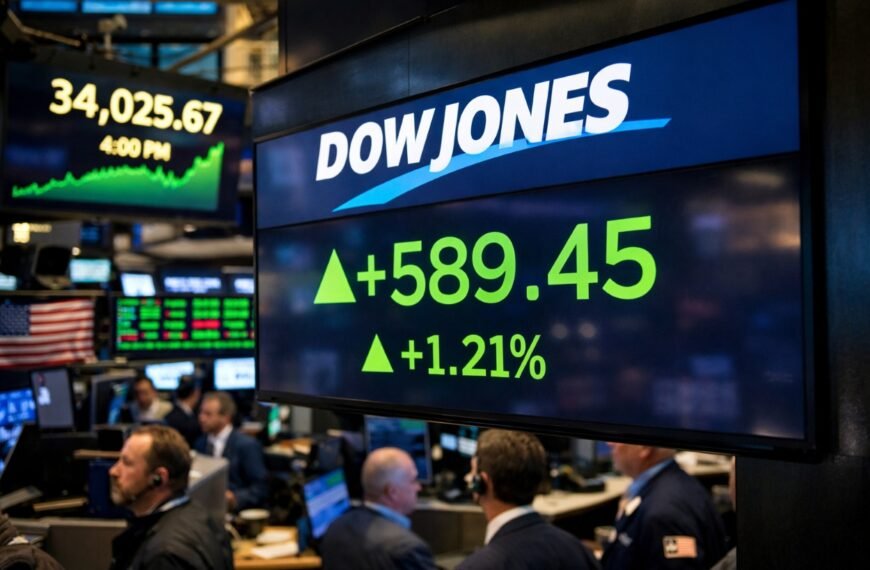
Financial markets reacted calmly to the Fed’s decision. Investors largely expected the pause, and stock indices showed limited movement as Powell spoke. Bond yields and currency markets also reflected the view that interest rates will remain stable in the near term, with gradual easing possible in the second half of 2026.
Most economists now forecast one or two rate cuts later in the year, likely starting around mid-2026, provided inflation continues to decline and economic growth remains steady.
What This Means for Borrowers and Businesses
By keeping rates unchanged, the Fed is signaling stability. Mortgage rates, auto loans, and business borrowing costs are unlikely to fall sharply in the immediate future, but they also are not expected to rise. For consumers, this means financing conditions remain manageable, though not as cheap as during the ultra-low-rate era.
For businesses, the pause offers predictability, allowing them to plan investments and expansion with greater confidence about the cost of capital.
Future Outlook: When Will Rate Cuts Resume?
Looking ahead, the key drivers for future Fed decisions will be:
- Inflation’s path toward the 2% target
- Labor market strength and wage growth
- Global economic conditions
- Fiscal and trade policies
- Financial market stability
If inflation continues to trend lower and the job market shows signs of softening, the Federal Reserve may begin reducing rates again in the second half of 2026. However, policymakers have made it clear that they are in no rush and will act only when data confirms that easing will not reignite price pressures.
Conclusion
The US Federal Reserve’s decision to keep interest rates unchanged in January 2026 reflects a careful balancing act between controlling inflation and supporting economic growth. Despite political pressure and internal debate, the central bank has chosen patience, emphasizing data-driven policy and institutional independence.
With the economy showing resilience and inflation gradually easing, the path remains open for future rate cuts. For now, the Fed is sending a clear message: stability first, caution always, and decisions guided by economic fundamentals rather than political influence.


 By
By